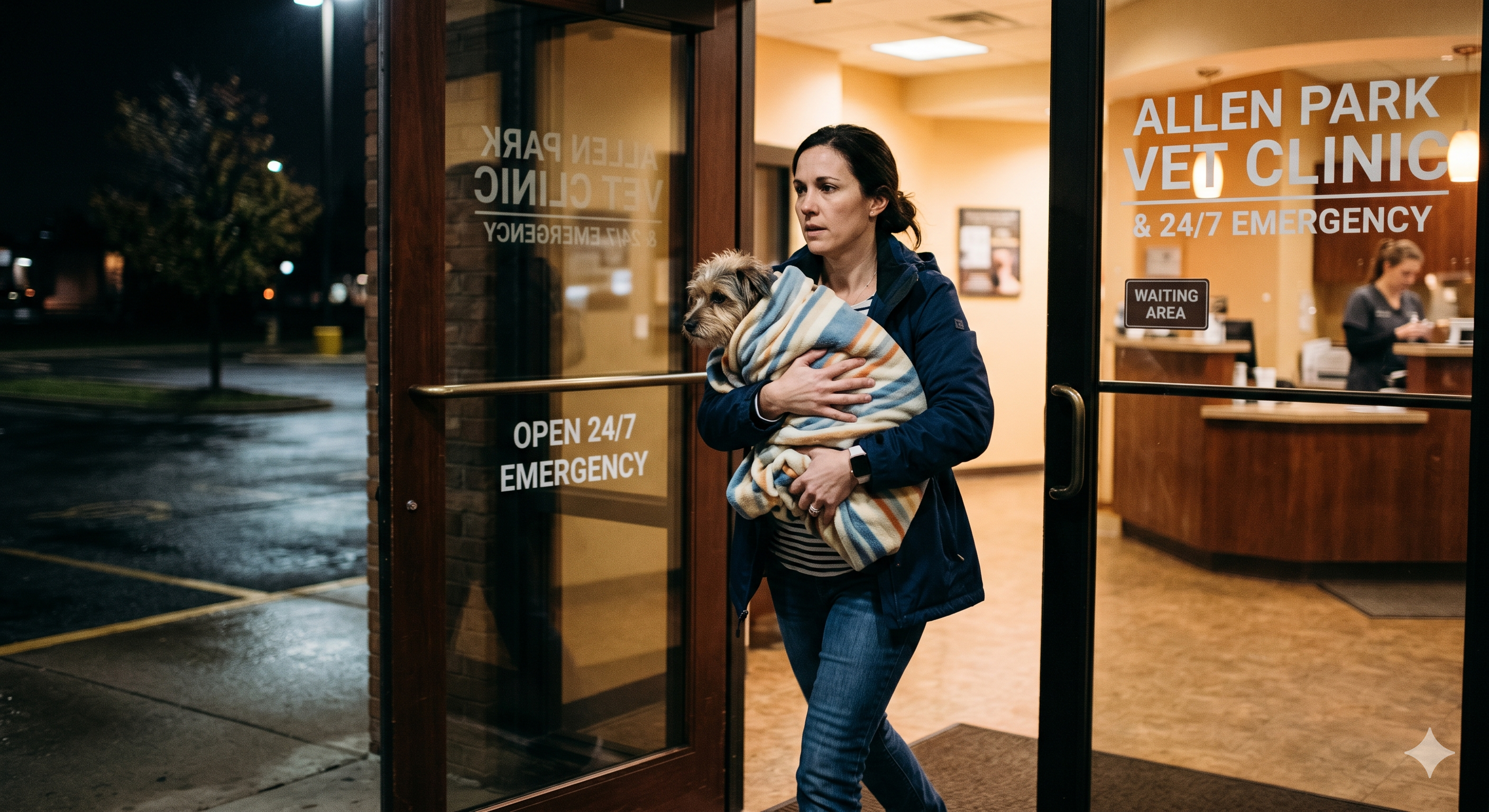
What to Bring to an Emergency Vet Visit
A pet emergency is one of the most stressful situations a pet owner faces. Your animal is in distress, you are panicking, and you have minutes to get out the door. In that state, the last thing you want to be doing is searching for a folder of vet records or trying to remember what medications your dog is on.
The best preparation for an emergency vet visit happens before any emergency occurs. Having the right information immediately accessible can help the ER team make better decisions faster, and it reduces the amount you need to hold in your head at exactly the moment when holding anything in your head is hardest.
What the emergency vet will ask
Emergency clinics see animals they have no prior relationship with. The intake process is fast, and the team will ask for key information immediately. Being able to answer confidently helps. The questions typically come in roughly this order:
| Question | Why they ask |
|---|---|
| What happened and when did it start? | Establishes urgency and helps narrow possible causes |
| Is your pet on any medications? | Affects what treatments are safe; some combinations cause dangerous interactions |
| Any known allergies or previous reactions? | Includes reactions to anaesthesia, antibiotics, or other drugs |
| Any known chronic conditions? | Heart disease, kidney disease, diabetes, epilepsy all change treatment options |
| When did your pet last eat or drink? | Important before anaesthesia or surgery |
| Is your pet up to date on vaccines? | Relevant if the presentation suggests an infectious cause |
| Any recent travel or exposure to other animals? | Helps identify potential exposures to regional or infectious diseases |
What to bring if you have time to grab it
In a genuine emergency, getting to the clinic quickly matters more than gathering paperwork. But if you have 60 seconds while someone else is getting the car, these are the things worth taking:
- Current medication list: Names, dosages, and frequency. If you can grab the physical boxes or bottles, do.
- Any substance your pet may have ingested: If you think they ate something toxic, bring the packaging, container, or a photo of it. The label tells the toxicologist exactly what they are dealing with.
- Medical records or a health summary: Even a photo of your pet's vaccine certificate or recent vet report is useful.
- Your regular vet's contact information: ER vets often want to call the primary vet for background on chronic conditions or previous bloodwork.
If your pet may have ingested something toxic: Call the ASPCA Animal Poison Control Center at (888) 426-4435 while you are driving to the clinic. They charge a consultation fee but can advise on severity and what the ER team should do.
What to know about the clinic itself
Emergency and specialty veterinary clinics operate differently from regular practices. They typically triage on arrival, meaning a pet with a life-threatening condition is seen ahead of others regardless of arrival order. Wait times can be long for non-critical cases.
Most emergency clinics do not have your pet's records. They will start from scratch. Having a clear account of your pet's health history, even verbally, significantly improves the quality of care they can provide.
Setting up before an emergency happens
The most useful thing you can do right now is build a simple emergency summary for each pet and keep it somewhere you can access in under 30 seconds. It should contain:
- Pet's name, species, breed, age, and weight
- Current medications with doses and frequency
- Known allergies or adverse reactions (including to anaesthesia)
- Known chronic conditions or diagnoses with approximate dates
- Vaccine status and dates of last core vaccines
- Your regular vet's name, clinic, and phone number
- Your pet's microchip number
- Name and contact of nearest 24-hour emergency clinic
A document like this on your phone or in a pet health app means you have it regardless of where the emergency happens, whether you are at home, at a friend's house, or two hours away on a hiking trail. It also means a dog sitter or family member looking after your pet has access to the same information if you are not the one who ends up at the clinic.
After the emergency visit
Emergency clinics will typically provide a discharge summary with the diagnosis, treatments given, and follow-up instructions. Add this to your pet's permanent records immediately, before the chaos of the situation makes it easy to forget. It is also worth calling your regular vet to let them know what happened so they can update their records and factor it into future care.
Keep your pet's emergency info always at hand
Store health history, medications, and vet contacts in Pett. Share with family so anyone can act fast when it matters.