Reptile Vet Care: Finding a Specialist and What to Track
Reptiles have a reputation for being resilient, low-maintenance animals. In practice, they are sensitive to husbandry errors in ways that are not always obvious and that accumulate over time. A bearded dragon kept at the wrong temperature gradient for a year does not immediately appear sick. By the time symptoms show, the underlying metabolic bone disease or immunosuppression may be advanced. Getting the husbandry right and verifying it with a vet who knows reptiles is the foundation of reptile health care.
Reptiles also require specialist veterinary care. Finding that vet before you need one urgently is worth doing early.
Finding a reptile vet
A reptile vet is a veterinarian with training or significant experience in reptile medicine. The Association of Reptilian and Amphibian Veterinarians maintains a member directory and can help locate practitioners in your area. Board-certified exotic specialists (Diplomates of the American Board of Veterinary Practitioners in Reptile and Amphibian Practice) have the highest formal credential, but experienced non-certified reptile vets are also worth seeking out.
When calling a clinic, ask specifically what reptile species they see most often and whether they have a gram scale, warming equipment for recovery, and in-house or rapid access to reptile bloodwork. A vet who sees one bearded dragon per month is unlikely to have the same diagnostic confidence as one who sees one per day.
New reptile veterinary check
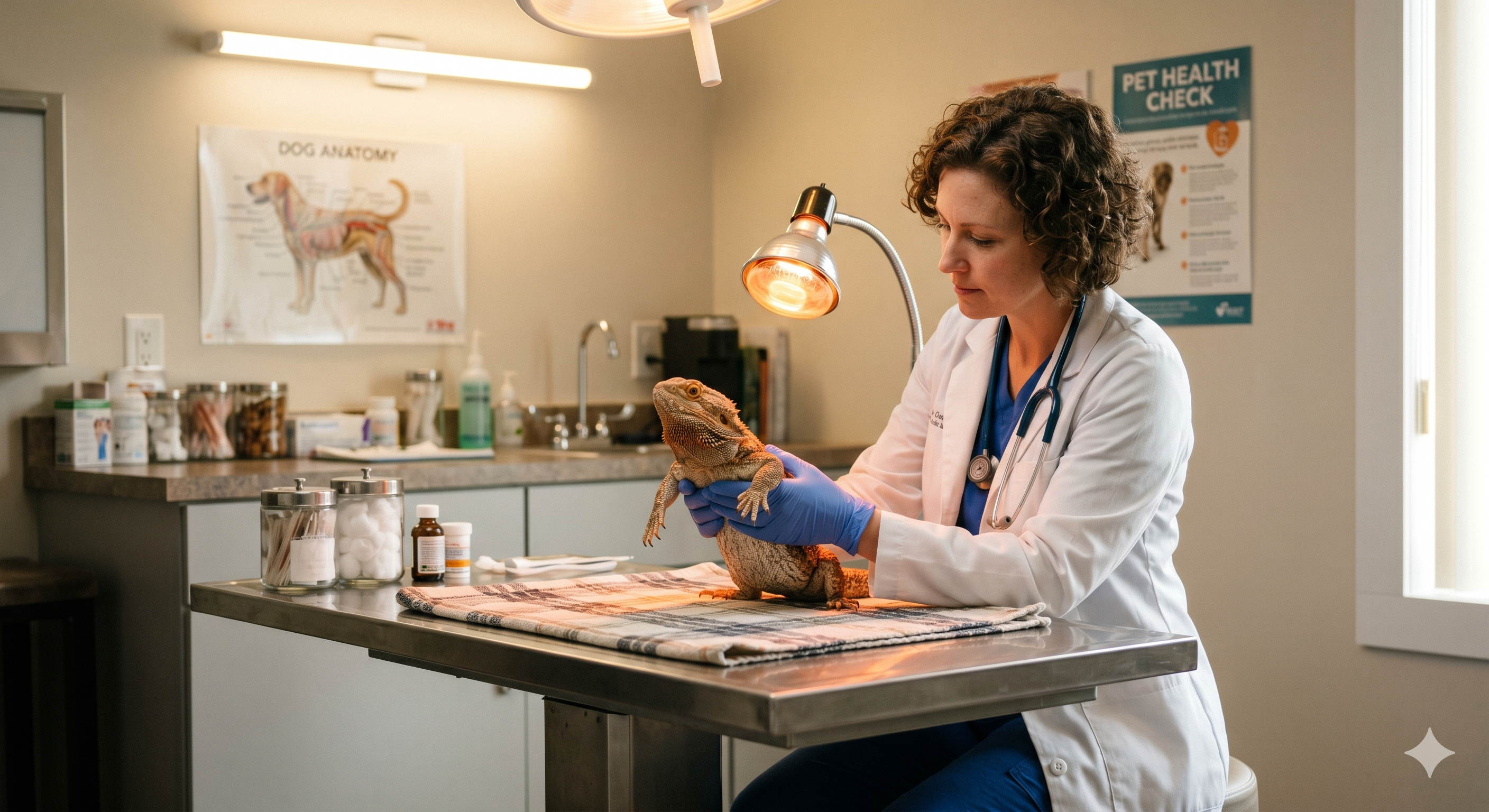
Any new reptile should have a vet visit within the first few weeks of ownership. At this visit, a reptile vet will typically:
- Weigh the animal on a gram scale
- Assess body condition (muscle mass, fat reserves)
- Examine the mouth, eyes, and skin
- Check for retained shed (dysecdysis) in relevant species
- Perform a fecal examination for parasites
- Discuss and review the husbandry setup (temperatures, UVB, substrate, feeding)
Fecal parasite checks are particularly important for reptiles purchased from pet stores or bred by less experienced breeders. Wild-caught animals carry a high parasite burden by default. Even captive-bred animals can carry parasites that, under stress, become pathogenic.
Husbandry review at the first visit is not optional. Most reptile health problems originate in husbandry. A vet who reviews your specific setup, temperatures, UVB schedule, and feeding protocol can identify problems before they cause illness. Bring photos of your enclosure and your temperature readings to the first appointment.
Common species and their key health concerns
| Species | Common health issues | Key husbandry requirement |
|---|---|---|
| Bearded dragon | Metabolic bone disease, adenovirus, impaction, coccidia | UVB lighting, appropriate calcium:phosphorus ratio in diet |
| Leopard gecko | Cryptosporidiosis, retained shed on toes, fatty liver | Warm hide, moist hide for shedding; avoid overfeeding |
| Ball python | Respiratory infection, inclusion body disease, mites | Appropriate humidity; warm hide temperatures 88–92°F |
| Crested gecko | Metabolic bone disease, floppy tail syndrome | UVB recommended; temperature must not exceed 80°F |
| Corn snake | Respiratory infection, mites, incomplete shed | Appropriate hide and ambient temperatures; humidity during shed |
| Blue-tongue skink | Respiratory infection, nutritional deficiencies | UVB, varied omnivore diet |
Annual health checks
Annual well-reptile exams are recommended for healthy adult animals. The frequency should increase if your animal is showing any signs of concern, has a known condition, or is elderly for its species. At an annual check, the vet will reassess body condition and weight, check for any changes since the last visit, and may recommend fecal testing or bloodwork depending on the animal's age and history.
Annual bloodwork establishes a baseline and can detect early organ dysfunction, nutritional deficiencies, and infection before they become clinical. For long-lived species, establishing baseline values while the animal is healthy makes future comparisons far more informative.
Husbandry records as health records
For reptiles, husbandry records are as important as medical records. Temperature gradients, UVB schedules, humidity levels, feeding frequency, prey size, and shedding dates all contribute to the picture a vet needs when investigating a health problem. A bearded dragon that has not shed in three months, has been eating irregularly, and has slightly low temperatures may be revealing a husbandry problem rather than a primary illness.
Keeping a log of feeding (what, how much, and whether the animal ate), shedding dates, and any behavioral changes gives you and your vet something concrete to work from when something seems off.
What to record for your reptile
- Species, sex (if known), date acquired, source (CB or WC)
- Weight in grams at each vet visit and periodically at home
- Husbandry setup: temperatures (hot spot, warm side, cool side, overnight), UVB bulb type and age, humidity
- Feeding log: prey type, size, frequency, and whether accepted
- Shed dates and whether shed was complete
- Fecal test results and any parasite treatment history
- Medications: names, doses, routes of administration
- Any behavioral changes and when first noticed
- UVB bulb replacement dates (output degrades before the bulb fails)
Track your reptile's health in Pett
Log vet visits, weight checks, feeding, and medications all in one place. Free to download.