Bird Vet Care: Annual Checks, Common Conditions, and What to Record
Birds are prey animals with a strong instinct to mask illness. In the wild, showing weakness invites predation, so birds will maintain normal-looking behavior until they physically cannot. By the time a pet bird looks obviously unwell, it has often been ill for some time. This biological reality makes proactive health care, not just reactive treatment, particularly important for bird owners.
It also means finding a vet who is genuinely experienced with avian species, because diagnosing and treating a bird requires knowledge and equipment that most general small animal practices do not have.
Finding an avian vet
An avian vet is a veterinarian with experience or specialty training in birds. The Association of Avian Veterinarians maintains a directory of member vets who have demonstrated a commitment to avian medicine. Board-certified avian specialists (Diplomates of the American Board of Veterinary Practitioners in Avian Practice) have the highest level of formal qualification, though experienced non-certified avian vets are also a good option in areas without specialists.
When calling a clinic, ask specifically how many birds they see per month, what species they are experienced with, and whether they have avian-specific equipment including warm air incubators for recovery, gram scales for precise weight measurement, and the ability to perform avian bloodwork in-house or with a quick turnaround at an external lab.
Annual health checks
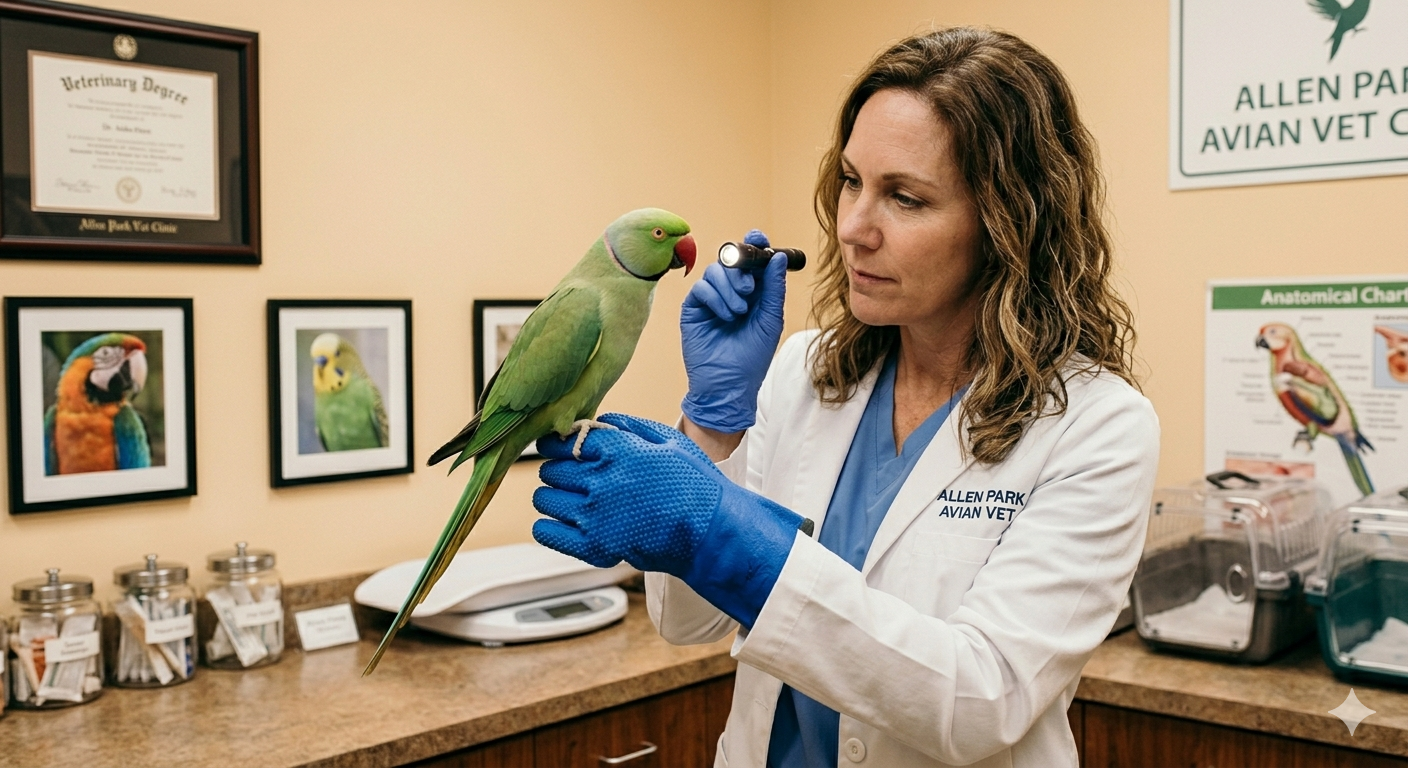
A well-bird exam once a year is the minimum for most healthy adult pet birds. Older birds, birds with known conditions, or birds showing any behavioral changes warrant more frequent visits. At a well-bird exam, an avian vet will typically:
- Weigh the bird on a gram scale (even small weight changes are significant in small birds)
- Examine the eyes, nares (nostrils), and choana (the slit in the roof of the mouth)
- Check feather condition and assess for plucking or abnormal feather structure
- Palpate the keel and crop
- Examine the cloaca and vent
- Listen to the lungs and air sacs
- Assess beak, nails, and feet
- Discuss diet, environment, and any behavioral changes
Many avian vets recommend baseline bloodwork at the first visit and periodically thereafter, particularly for larger long-lived birds like African Greys, Amazons, Cockatoos, and Macaws. A blood panel provides a baseline against which future values can be compared and can identify subclinical issues before they become clinical.
Baseline bloodwork matters for long-lived birds. Large parrots can live 40 to 80 years. A blood panel taken at age 5 gives your vet something to compare against at age 10, 20, and beyond. Without a baseline, changes in values are harder to interpret. Establishing this early is much more useful than establishing it after a problem appears.
Common health issues
| Condition | Affected species | Signs to watch for |
|---|---|---|
| Psittacine Beak and Feather Disease (PBFD) | Parrots, parakeets | Abnormal feathers, beak deformities, immunosuppression |
| Aspergillosis | Any species, especially African Greys | Respiratory distress, voice changes, tail bobbing |
| Proventricular Dilatation Disease (PDD) | Parrots | Weight loss, passing undigested food, regurgitation |
| Chlamydiosis (Psittacosis) | Any species | Lethargy, nasal discharge, green droppings; transmissible to humans |
| Feather destructive behavior | Any species | Chewed or plucked feathers; may be behavioral or medical |
| Egg binding | Female birds | Straining, tail bobbing, sitting on cage floor; emergency |
Drooping behavior is always worth investigating
The most reliable sign of illness in a bird is a change in normal behavior: less vocalization than usual, a bird sitting fluffed on the cage floor instead of on a perch, reduced interest in food, or any change in droppings (color, consistency, frequency). Each of these by themselves may have an innocent explanation. In combination, or when a bird that is normally active and vocal becomes quiet and hunched, treat it as a potential emergency and contact your avian vet.
Environmental factors that affect health
Birds have extremely sensitive respiratory systems. Non-stick cookware (PTFE/Teflon) heated to high temperatures releases fumes that are lethal to birds and may cause no obvious symptoms in the owner. Scented candles, air fresheners, cigarette smoke, and cleaning products with strong fumes are also dangerous. Recording what your bird is exposed to and when is useful if a respiratory problem develops.
What to record for your bird
- Species, sex (if known), hatch date or estimated age
- Weight in grams at each visit
- Baseline bloodwork results
- Vaccination history (some avian vets vaccinate for Polyomavirus in parrots)
- Any medications: name, dose, duration, and tolerance
- Diet composition and any changes
- Feather condition and any plucking history
- Behavioral changes and when they were first noticed
- Environmental changes (new household member, moved cage, new products used)
Track your bird's health in Pett
Log vet visits, weight history, medications, and behavioral notes. Free to download.