Managing Medications for Multiple Pets
One pet on one medication is manageable. Two pets on different schedules gets complicated. Three pets with a mix of daily medications, monthly preventatives, and a short antibiotic course for one of them is genuinely difficult to keep straight, especially when multiple people are involved in their care.
A system that works for one pet does not automatically scale. The failure modes in multi-pet households are specific: wrong pet gets the right medication, right pet gets the wrong dose, one pet's schedule slips while you are focused on another. Each of these is avoidable with the right structure, and none of them require anything elaborate.
Why multi-pet management is its own problem
When you have multiple pets, medications can look similar, be stored together, and share the same administration routine. A dog and a cat both on monthly flea prevention, stored next to each other in the same drawer, is a straightforward mix-up waiting to happen when you are tired or rushed. The products may look similar but have very different active ingredients, with some dog products being toxic to cats.
Beyond safety, there is the tracking problem. A single phone alarm for "give medication" does not tell you which pet or which medication. By the time you have three alarms and two pets, you are starting to rely on memory to fill in the gaps, which is exactly what a system is supposed to replace.
Separate records for each pet
The foundational rule for multi-pet medication management is that each pet needs a completely separate record. Not a shared spreadsheet with one tab per pet. Not a mental model. A separate, distinct record that includes:
- The pet's name and species prominently labelled
- A list of current medications with doses, frequency, and special instructions
- A log of every dose given
- Reminders tied to that specific pet
Separation matters because it creates a physical boundary between pets. When you open the record for Cat A, you are only seeing Cat A's medications. There is no risk of confusion with Cat B's record because you are not looking at both simultaneously.
Physical storage matters
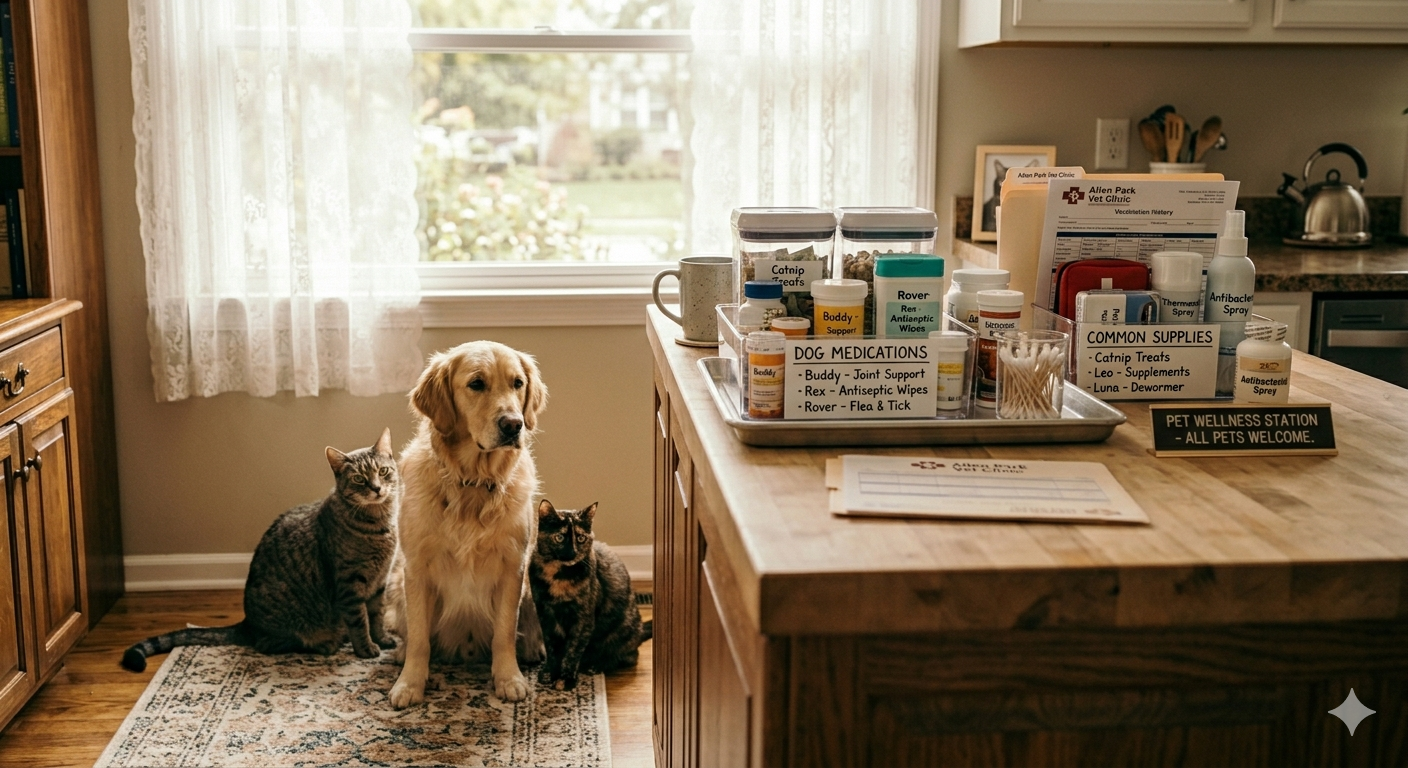
Keep medications physically separated by pet. Separate drawers, separate shelves, or separate labeled bags. Anything that creates a physical signal that "this group belongs to this animal" reduces the chance of grabbing the wrong product. Labels help here: a piece of tape with the pet's name on the medication box costs nothing and eliminates a common error.
Never use dog flea or tick products on cats. Many contain permethrin or pyrethrins, which are toxic to cats. Keep dog and cat preventatives physically separated and clearly labeled, and double-check the label every time before applying.
Timing across multiple schedules
Multi-pet households often end up with medications due on different days, different times, and different frequencies. Rather than managing each separately, grouping administration times where possible reduces the number of times per day you need to be thinking about medications.
| Strategy | When it works |
|---|---|
| Same administration time | When pets have medications with the same frequency (both twice daily, both monthly on the 1st) |
| One pet per task | Dedicated pet-specific reminders so each alarm names the pet and the drug |
| Weekly prep | Fill a weekly pill organizer per pet on Sunday; visible at a glance if doses are being given |
| Shared log, separate entries | One caregiver can see all pets but entries are clearly labeled by pet name |
When multiple people administer medications
Multi-pet households often also mean multiple caregivers: partners, family members, pet sitters. The question of whether a medication has been given becomes exponentially harder when more than one person might have given it, and you cannot see at a glance.
The double-dose problem is the most common failure here. Two people each give the morning dose of a cat's thyroid medication because neither was certain the other had done it. For some medications this is harmless. For thyroid medications, NSAIDs, and seizure medications, it is not.
A shared log where anyone can see the current status, and mark doses as given, is the only real fix. A verbal "did you do the meds?" followed by an uncertain "I think so" is not sufficient when the stakes include over-medication.
Refill tracking across multiple medications
With multiple pets on multiple medications, running out of a critical medication becomes more likely simply because there are more medications to track. A cat running out of thyroid medication, a dog running out of seizure medication, or a short antibiotic course ending without the owner realising it are all genuine scenarios in multi-pet households.
Noting the quantity on hand and setting a reminder to reorder when approximately two weeks of supply remains gives enough time to contact the vet for a prescription renewal and get it filled before running out. For controlled medications that require a new prescription each time, the lead time matters.
What the system should include
- Separate profile and medication list for each pet
- Named, pet-specific reminders for every scheduled dose
- A log that records who gave what, to which pet, and when
- Physical separation of medications by pet
- Refill reminders set well in advance of running out
- Shared access for all caregivers with real-time visibility
One app for all your pets
Create separate profiles, set individual reminders, log doses, and share access with everyone who helps care for your animals. Free in Pett.