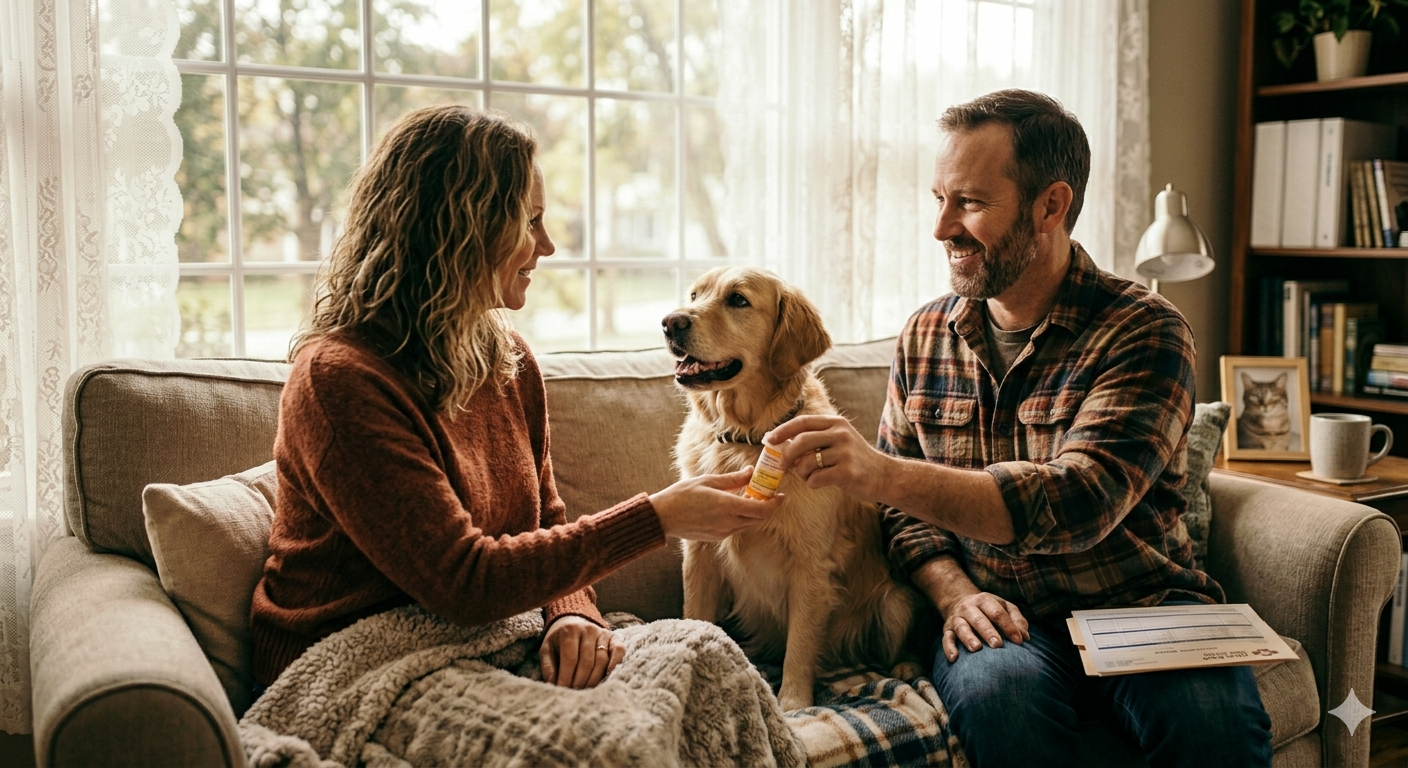
How to Share Pet Care With a Partner, Family Member, or Sitter
Most pets are cared for by more than one person. A partner gives the morning dose while you give the evening one. A family member covers when you travel. A pet sitter stays for a week and needs to know everything your vet would ask about in an emergency. In each of these cases, the same information needs to be in the hands of whoever is doing the caring, updated whenever something changes.
The problem with most informal arrangements is that information gets shared once and then goes stale. A partner has a medication list that was accurate three months ago. A sitter has a note from the last time they stayed, before the vet added a new medication. The current state exists only in the head of the primary caregiver, which works until it does not.
What every caregiver needs to know
The information a caregiver needs depends on how long they are covering and what the pet's situation is. At minimum, anyone caring for a pet should have:
| Information | Why it matters |
|---|---|
| Current medications with doses and timing | Prevents missed doses, double doses, and incorrect administration |
| Known allergies and adverse reactions | Prevents a well-meaning caregiver from giving something harmful in an emergency |
| Known chronic conditions | Helps caregiver recognise warning signs and make informed decisions |
| Vet clinic name and phone number | First call in any non-emergency health concern |
| Nearest emergency clinic | For after-hours urgent situations |
| Owner contact information | Primary and backup, in case the first contact is unreachable |
| What to do in specific scenarios | Instructions for known medical conditions, signs of crisis, or what not to do |
The problem with sending a photo or document once
A photo of a medication label sent in a text message captures a moment. The moment the medication changes, the label changes, or the dose is adjusted, that photo is wrong. The caregiver does not know it is wrong. They use the old information, and the error goes unnoticed unless it causes a visible problem.
This applies to PDF handoffs too. A care document emailed before a trip is accurate when it is sent. If a vet calls with a dosage change while you are away, the document the sitter has does not reflect it. Keeping the sitter updated requires a separate call or message, which is easy to forget when you are in the middle of travelling.
One source of truth: The goal is for there to be one record, visible to everyone who needs it, that reflects the current state. When something changes, it changes in one place and everyone sees the updated version. Any arrangement where different people have different versions is an information gap waiting to matter.
Partners and shared households
In households where two people share care, the most common failure mode is the double-dose problem: both people give a medication in the morning because neither confirmed whether the other had done it. "I think I gave it" followed by a second dose is how it happens.
A log that shows who gave a dose and when, visible to both people in real time, is the fix. It transforms "did you give the pill?" from a question that requires a conversation into a question that either person can answer by looking at the record.
Pet sitters and temporary caregivers
Handing off to a pet sitter is where the information gap is highest. A sitter who has cared for your pet before may have outdated information. A new sitter has no information at all beyond what you give them in a handoff conversation.
For a sitter covering more than a day or two, a written summary is more reliable than a verbal briefing. What you want them to know at 11pm on day four should not depend on what they remember from the conversation you had when you dropped off the key. Key things to include for a sitter:
- Each medication: name, dose, time to give, and how to give it (with food, crushed, etc.)
- Any known medical conditions or things to watch for
- Feeding schedule and any dietary restrictions
- What counts as an emergency requiring a vet call vs. what can wait
- Your vet's number and the nearest emergency clinic
- How to reach you and a backup contact
- Pet's microchip number in case they get out
Family members caring for a pet during emergencies
When you are the one in an emergency and someone else needs to take over your pet's care, you cannot brief them at that moment. The information they need has to already exist somewhere accessible. A complete pet health record that a family member can pull up on their phone means they can step in immediately without needing to track down your vet, call the clinic for records, or guess at medications.
What the sharing setup needs
- Current medication list, always up to date, visible to all caregivers
- A dose log showing who gave what and when
- Known conditions, allergies, and vet contact details
- Access that does not require the primary caregiver to be reachable
- Updates that propagate automatically when something changes
Share your pet's care with anyone
Invite family, partners, or sitters to view your pet's profile in Pett. Everyone sees the same up-to-date information. Free to download.