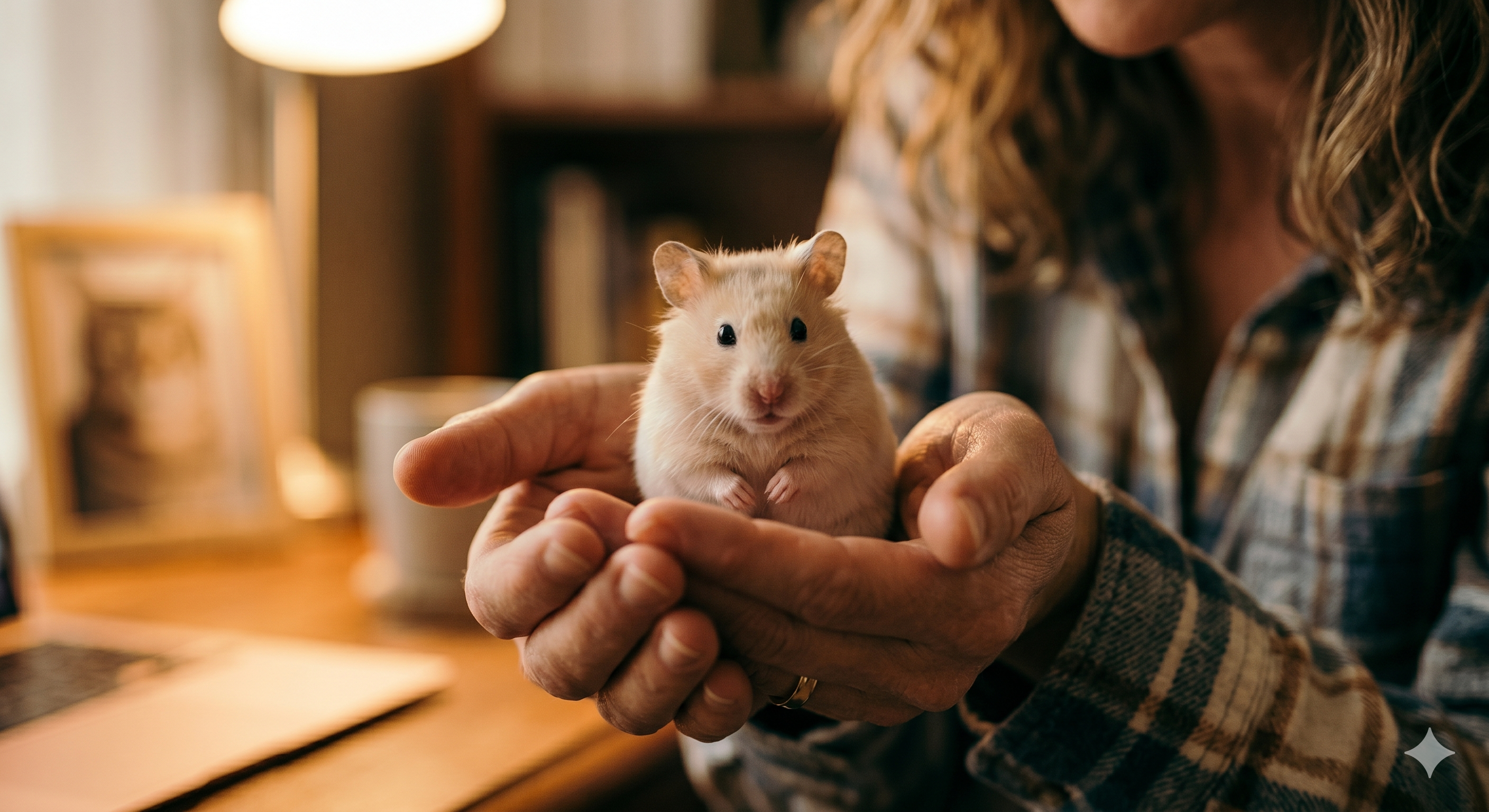
Small Pet Health: Hamsters, Gerbils, and Rats
Small pets like hamsters, gerbils, and rats have short lifespans relative to dogs and cats, which makes monitoring their health over those compressed timelines both more urgent and more easily overlooked. A hamster that is 1.5 years old is already in middle age. A rat that seems fine at 18 months can develop a mammary tumor by 20 months and be significantly unwell by 22.
Recognising this compression is the first step toward appropriate care. These animals age fast, so the same health attentiveness that would be appropriate for a 7-year-old dog is warranted much earlier in a small mammal.
Finding the right vet
Small mammals like hamsters, gerbils, rats, and mice are exotic companion mammals. Most general small animal practices have limited training and experience with them. Finding a vet who sees them regularly, or who has an interest in exotic small mammals, significantly affects the quality of diagnosis and treatment available to your animal.
The same search approach used for other exotic pets applies: look for vets who advertise exotic or exotic companion mammal experience, ask how many small mammal patients they see, and ask specifically about the species you have. A vet experienced with ferrets may have limited experience with rats; a vet who sees guinea pigs regularly is more likely to have useful crossover knowledge for hamsters and gerbils.
Lifespans and what they mean for health monitoring
| Species | Typical lifespan | When health monitoring intensifies |
|---|---|---|
| Syrian hamster | 2–3 years | From around 18 months |
| Dwarf hamster | 1.5–2 years | From around 12–14 months |
| Gerbil | 3–5 years | From around 2.5 years |
| Rat | 2–3 years | From around 18 months; females prone to tumors earlier |
| Mouse | 1.5–2.5 years | From around 12 months |
Signs of illness in small mammals
Small mammals mask illness for the same reason other prey animals do. By the time behavior changes noticeably, the underlying condition is often advanced. Daily observation of normal behavior creates the baseline against which you can detect changes: how much food is typically consumed, how much the wheel is used overnight, normal grooming patterns, and typical posture when resting.
Signs worth a vet contact in any of these species:
- Reduced food or water intake
- Unusual lethargy or unresponsiveness to handling
- Weight loss (a kitchen scale is useful for weekly weighing)
- Any visible lump or swelling
- Labored or noisy breathing
- Wetness around the tail area (in hamsters, this is "wet tail," a severe bacterial infection)
- Balance problems or circling (common in gerbils with epilepsy or middle ear disease)
- Eye crusting or discharge
Wet tail in hamsters is an emergency. Wet tail (proliferative ileitis) is a severe bacterial infection causing watery diarrhea that is rapidly fatal without treatment, often within 24 to 48 hours. A hamster with a wet tail area, foul smell, and lethargy needs a vet immediately, not a wait-and-see approach.
Species-specific conditions
Hamsters
Syrian hamsters are prone to diabetes (especially in dwarf breeds), cheek pouch impaction, and dental problems. Heart disease is common in older hamsters. Dwarf hamsters have a notably higher diabetes incidence than Syrians. A hamster drinking or urinating more than usual is worth a vet visit for a diabetes check.
Gerbils
Gerbils are prone to epileptiform seizures (often mild, starting in juveniles), middle ear infections causing head tilt and circling, and Tyzzer's disease (a bacterial infection, often stress-triggered). Tail degloving (the skin being stripped from the tail) is a husbandry injury that requires prompt veterinary management.
Rats
Rats have the most complex health needs of the common small pet species. Female rats are prone to mammary tumors and pituitary tumors; the former are often benign and surgically removable, the latter are not operable but can be managed with hormonal treatment for a period. Respiratory disease (mycoplasmosis) is endemic in most rat populations and manageable but rarely curable. Male rats are susceptible to hind leg degeneration in old age.
Spaying female rats before 6 months of age dramatically reduces the lifetime risk of mammary tumors. This is a significant intervention with meaningful quality-of-life implications for a pet that may only live 2 to 3 years.
Veterinary care decisions and cost
One practical reality of small pet medicine is that veterinary costs are not scaled to the animal's size or price. A tumor removal on a rat costs similarly to one on a cat in terms of surgical time, anaesthesia, and monitoring. This prompts many owners to make different cost decisions for small mammals than for dogs or cats, which is understandable.
The useful approach is to think about this before it becomes an emergency. A vet who knows your rat or hamster and has a baseline record has a better foundation for advising on which interventions are likely to help and which are likely to cause more stress than benefit. Having that relationship before a crisis makes those conversations more informed and more useful.
What to record
- Species, sex, date acquired or birth date if known
- Weekly weight at home
- Feeding log: diet, quantities, any changes
- Behavioral baseline: activity level, wheel use, grooming, social behavior
- Any medications given: name, dose, duration
- Any lumps, wounds, or other physical findings with dates first noticed
- Vet visit notes: date, findings, treatment, follow-up
Keep records for all your pets, any size
Log vet visits, medications, and health notes for your hamster, gerbil, rat, or any other small pet in Pett. Free to download.