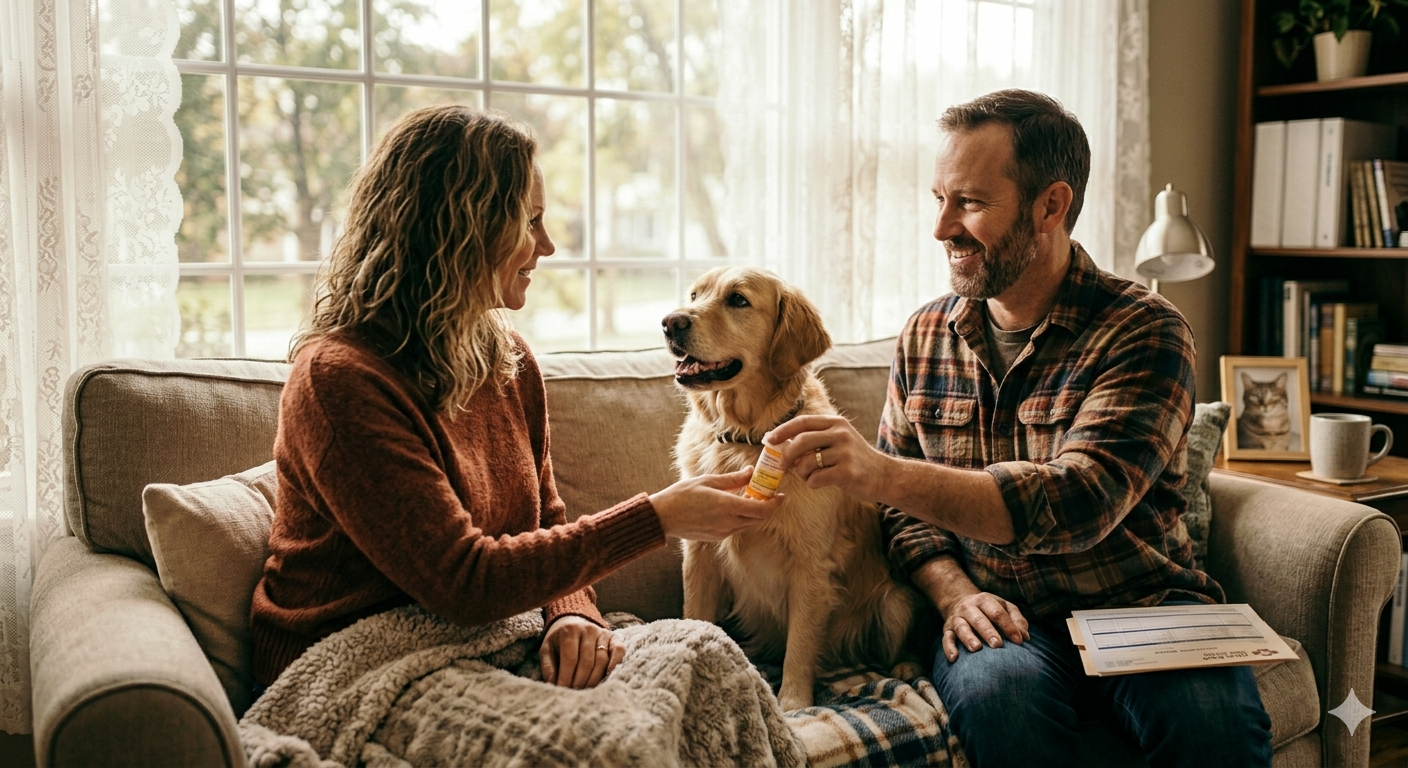
How to Share Pet Care With Family and Caretakers
Pet care rarely falls on one person for the entire life of an animal. Partners split daily responsibilities. Parents hand off tasks to older kids. Dog walkers handle midday care. Grandparents watch the cat during a vacation. Shared care is the norm, and the problems it creates are predictable: missed doses, double feedings, and caretakers walking into a situation without the information they need to handle it.
The fix is not better communication in the moment. It's a shared system that everyone can access, so the current state of the pet's care is visible without anyone needing to ask.
Where shared pet care breaks down
Most shared care problems fall into a few categories. Knowing which one you're dealing with helps you build the right solution.
| Problem | What causes it |
|---|---|
| Double feeding or missed meals | No way to see whether the other person already fed the pet |
| Missed or double medication doses | No shared dose log; each person assumes the other handled it |
| Caretaker without critical info | Dog walker or petsitter doesn't know about allergies or conditions |
| Vet visit gaps | One person attends the appointment; the other never gets the full picture |
| Emergency confusion | Caretaker doesn't have vet contact, medication list, or allergy information |
What information every caretaker needs
Anyone responsible for a pet, even temporarily, needs access to a core set of information. Not everything in the full health record, but enough to handle routine care and recognize when something is wrong.
- Feeding schedule and portion size
- Active medications, dose, and timing
- Known allergies and what reaction to watch for
- Any current health issues or things to monitor
- Preferred vet name and phone number
- Emergency contact for the owner
This is a short list, but most caretakers don't have reliable access to all of it. The information lives in the primary owner's head, in text messages, or across a mix of paper records and app notes that aren't shared.
Before any trip or handoff: Write down the feeding schedule, active medications with doses, known allergies, and your vet's number in one place and share it with whoever is covering care. A shared app with live data is better, but even a static document is better than a verbal briefing.
Dividing care responsibilities clearly
Ambiguity causes most shared care failures. When responsibility is split without clear assignment, both people assume the other handled it. The solution is not more reminders; it's assigning ownership of specific tasks.
A simple approach: designate one person as responsible for morning care (feeding, any AM medications) and one for evening care. For weekly or monthly tasks like flea prevention or supplements, assign one person as the owner and have them log it when done so the other can see it happened.
This structure works even when schedules change. If the morning person is traveling, the evening person takes over. The key is that the handoff is explicit and the log reflects what actually happened, not what was planned.
Sharing care with people outside your household
Dog walkers, petsitters, and boarding facilities need a different level of access than a partner or family member. They need the practical information: what and when to feed, what medications to give and how, what to watch for, and who to call. They typically don't need the full health history.
When setting up care with an outside caretaker, provide:
- A printed or shared document with the feeding schedule and medication instructions
- A list of known allergies, especially food allergies if you're leaving food with them
- Your vet's address and phone number, and your own
- Any behavioral context that affects care (anxiety triggers, reactivity, medications taken for specific situations)
The American Veterinary Medical Association recommends providing your veterinarian's contact information and written authorization for emergency treatment whenever you leave a pet in someone else's care.
Using Pett to coordinate shared care
Pett lets you share a pet's profile with family members, partners, or caretakers directly from the app. Each person can see the feeding schedule, care tasks, and medication schedule in real time. When someone logs a dose or checks off a feeding, it's visible to everyone else immediately.
Caretakers who don't need access to the full health history can be added with view-only access. They see the care tab, including the feeding schedule, medication reminders, and any allergies, without being able to edit health records. This is the right level of access for a dog walker or petsitter: enough to do their job, not more than they need.
For partners or family members who share full responsibility, editor access gives them the same ability to log vet visits, update medications, and track health records as the primary owner. The pet's health history builds in one place regardless of who attended which appointment.
Handling care during travel
Travel is when shared care coordination breaks down most visibly. The person staying home or petsitting needs complete, accurate information, and the owner needs confidence that care is happening as planned.
Before any trip, verify that whoever is covering has app access and can see the current medication schedule and feeding routine. Walk through the medication list once before you leave. If anything in the schedule is likely to change while you're gone, adjust it in the app so the caretaker sees the current version rather than something you briefed them on days earlier.
Share pet care with Pett
Invite family, partners, or caretakers to your pet's profile. Everyone sees the same feeding schedule, medications, and care tasks. Free on iOS and Android.