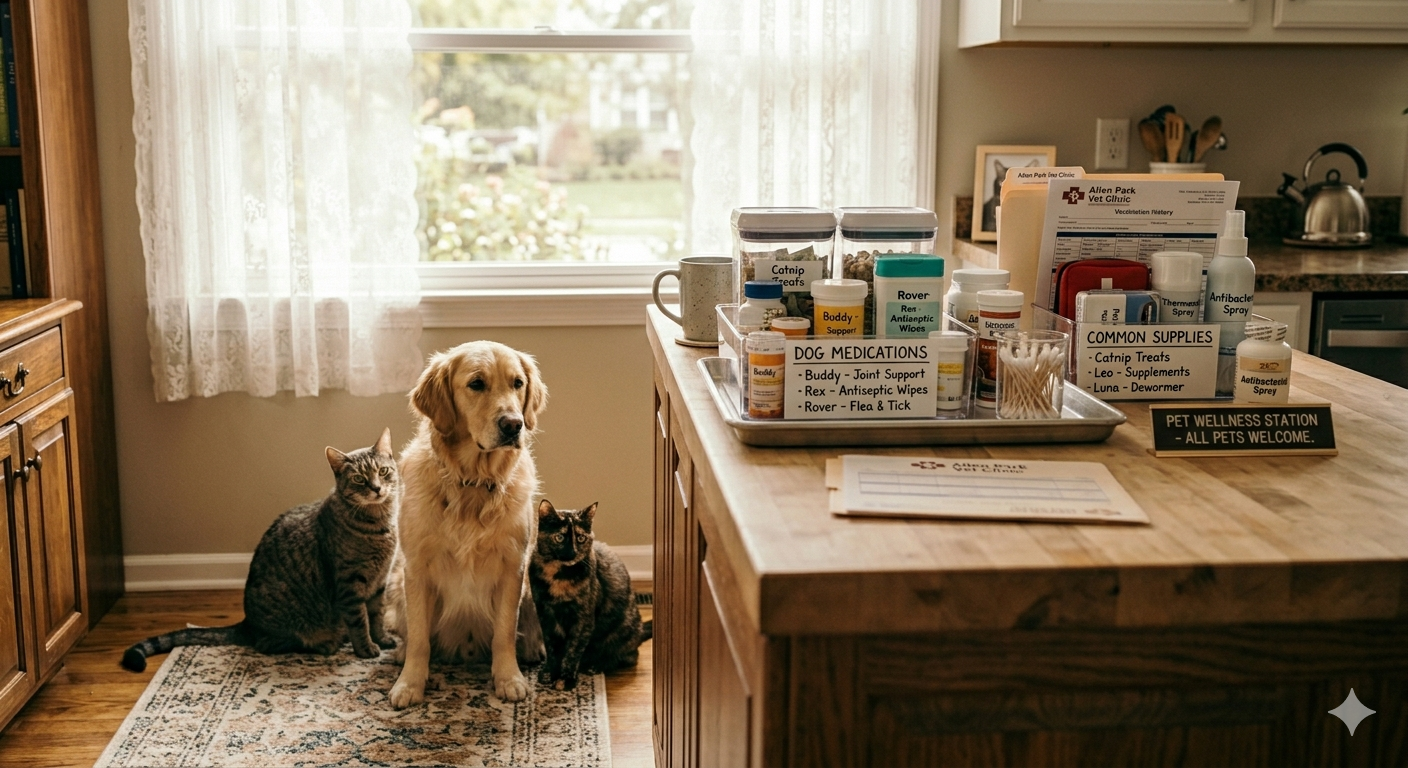
Managing Multiple Pets: Feeding, Medications, and Schedules
One pet with a straightforward health history is manageable with informal systems. Two or more animals with different diets, different medication schedules, and different vet relationships is a different situation. The informal approach that works for one pet starts producing errors with three.
The challenge with multiple pets is not the volume of care tasks individually. It's that each animal has their own schedule, their own health profile, and their own needs, and those don't naturally align. A system that treats them separately but keeps everything accessible in one place solves the problem most people with multiple pets actually have.
Where multi-pet households lose track
The failure points in multi-pet households tend to cluster around a few areas:
| Area | Common problem |
|---|---|
| Feeding | Different food types or schedules per animal; one pet eating another's food |
| Medications | Overlapping schedules; giving the wrong animal the wrong medication |
| Vet records | Records scattered across different clinics or mixed together in one folder |
| Preventive care | Different vaccination schedules; hard to track which animal is due for what |
| Weight monitoring | Hard to track trends for individual animals when multiple share space |
Keeping records separate per animal
The most important structural decision for multi-pet households is maintaining completely separate health records for each animal. Mixed records create confusion quickly: when you need to know what flea product your older dog is on, you don't want to search through a folder that contains records for all three pets.
Each pet should have their own profile with their own vaccination history, medication list, vet visit log, weight history, and allergy record. The separation also matters at the vet. When a vet asks about medication history for a specific animal, you need to pull that animal's record, not sort through a combined file.
Label everything physically too. If you store paper records at all, use a separate folder or binder section per animal, labeled with their name and species. Paper records that get mixed together are difficult to untangle after the fact.
Managing different diets across multiple pets
Different food types, different portion sizes, and animals on prescription diets all add complexity to feeding routines. A few things that help:
- Feed pets in separate spaces if any of them are on restricted diets or eat faster than others. Communal feeding creates competition and makes it impossible to track who ate what.
- Log feeding by animal rather than by household. Knowing that the household was fed is less useful than knowing that the dog with pancreatitis got her specific portion and nothing else.
- Note diet changes in each animal's health record with the date. If a digestive issue develops, knowing when the food changed narrows the cause significantly.
Medication safety with multiple animals
Medication errors in multi-pet households are more common than people realize. Some medications safe for dogs are toxic to cats. Chewable tablets that appeal to one animal may be found and eaten by another. Dose amounts are weight-based and cannot be transferred between animals of different sizes.
The American Veterinary Medical Association recommends storing all pet medications separately, labeled by animal, and never sharing medications between pets without veterinary guidance. This applies even when the medication is the same drug at the same dose.
Practical steps to reduce medication errors:
- Store each animal's medications in a separate container, clearly labeled with their name
- Log doses immediately after giving them, not at the end of the day
- If a caretaker handles medication for multiple animals, give them a written schedule per animal rather than expecting them to recall a verbal briefing
Coordinating vet appointments across multiple animals
With multiple pets, routine vet visits accumulate. Annual exams, dental cleanings, vaccination boosters, and follow-ups for any ongoing conditions add up to a significant number of appointments each year. Without a tracking system, it's easy to fall behind on one animal's preventive care while staying current on another's.
Keeping each animal's next due dates in their health record gives you a way to review upcoming care at a glance. A quick check at the start of each month shows which appointments need to be scheduled. This is more reliable than relying on reminder postcards from the vet, which assume your contact information is current and don't account for pets who see multiple clinics.
Using Pett for multiple pets
Pett supports any number of pets, each with their own separate profile. Dogs, cats, birds, rabbits, and other animals all have dedicated health record templates appropriate for their species. You can switch between pets from the home screen and see the care tasks and health status for each one independently.
Each pet's medication schedule, feeding routine, and care tasks live on their own care tab. Reminders are per-animal, so a notification for a dog's heartworm dose doesn't get confused with a reminder for the cat's thyroid medication. Shared caretakers can be added to individual pets, so a partner who primarily manages one animal can be given access to that animal's profile without needing access to all of them.
For households with many animals, keeping everything in one app rather than across separate notes, calendar reminders, and paper records reduces the overhead of multi-pet management to a routine that actually holds up.
One app for all your pets
Separate profiles, schedules, and health records for every animal in your household. Free on iOS and Android.