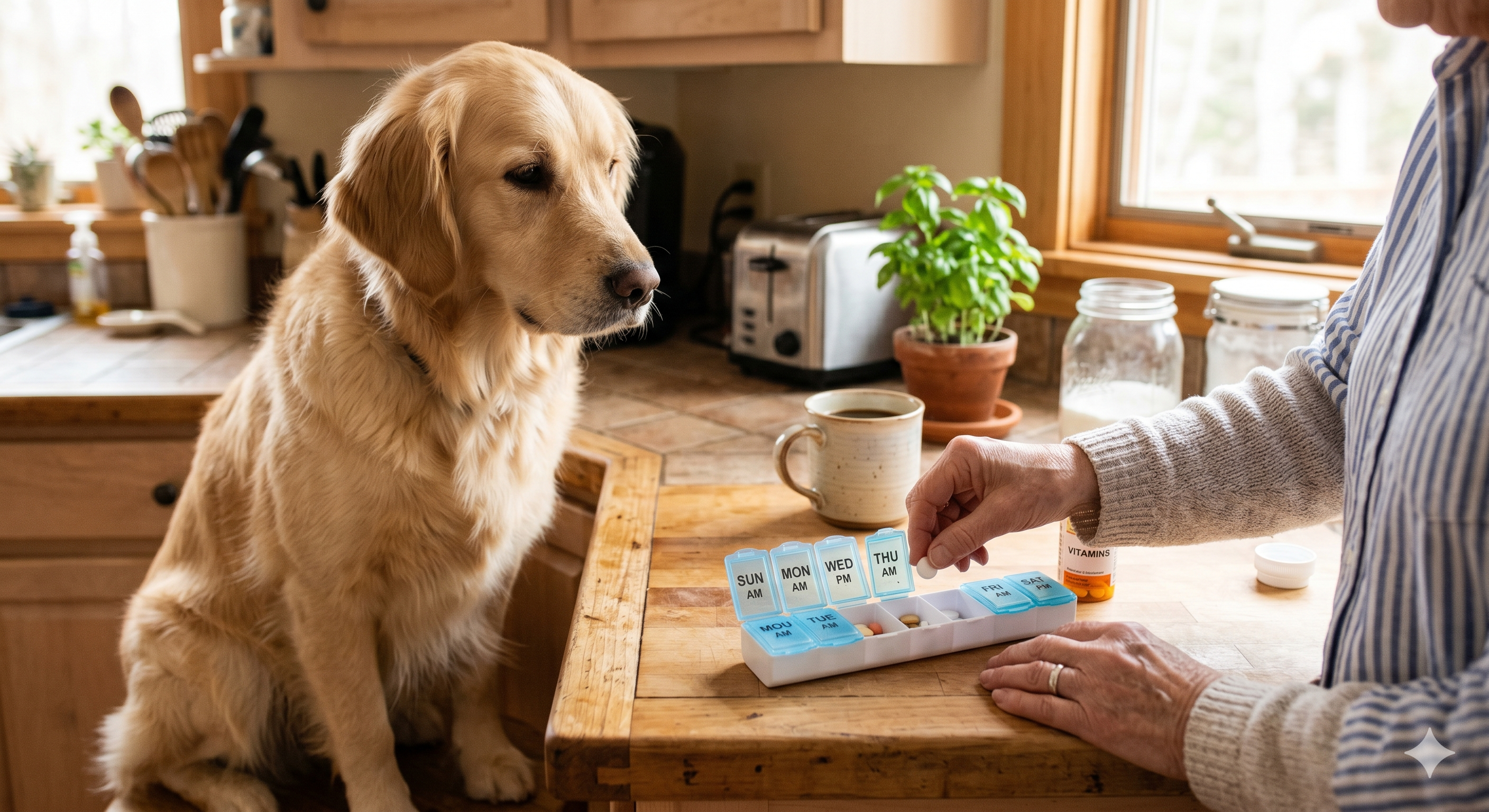
How to Track Pet Medications and Never Miss a Dose
Staying on top of a single medication for one pet is manageable. The situation changes fast when you have multiple animals, overlapping schedules, or medications that run on different intervals — daily antibiotics, monthly heartworm prevention, quarterly flea treatments. Add a second person handling care, and the question of whether today's dose was given becomes a real one.
Missing a dose of a routine supplement is usually not a crisis. Missing a dose of a seizure medication, an antibiotic mid-course, or an immunosuppressant is. Building a reliable tracking system takes the guesswork out of it, regardless of what your pet takes or how many people are involved in their care.
What makes pet medication tracking hard
Medications come with different schedules — some daily, some weekly, some monthly, some tied to specific days of the week or a day of the month. Memory alone is a poor system for this, especially when routines vary. Vacations, schedule changes, and shared households all create gaps.
Veterinary records rarely come formatted in a way that makes tracking easy. You get a prescription label, maybe a handout, and a follow-up appointment. None of that tells you, two months from now, when the last dose of flea prevention was given.
What to record for each medication
For any medication your pet takes, keep these details in one place:
| Field | Why it matters |
|---|---|
| Medication name | Generic and brand name if relevant; vets may switch between them |
| Dose amount | mg, ml, or number of tablets; critical for refill conversations |
| Frequency | Daily, weekly, monthly, or custom interval |
| Start date | Helps calculate when a course ends and when refills are due |
| Prescribing vet | Useful if you switch vets or need an emergency refill |
| Dose log | Record of when each dose was given and by whom |
The dose log is the piece most people skip, and it's the most useful one. When your partner asks "did you give the pill this morning," a log gives you a clear answer. When your vet asks how compliant you've been with a course of antibiotics, the log is your evidence.
For ongoing medications: Link the dose schedule to a reminder system, not just your memory. A recurring phone reminder at the same time each day takes 30 seconds to set up and eliminates the daily question of whether you forgot.
Common pet medication schedules and their challenges
| Medication type | Typical frequency | Common tracking problem |
|---|---|---|
| Antibiotics | 1–3 times daily for 7–14 days | Hard to keep track mid-course; easy to stop early when pet seems better |
| Heartworm prevention | Monthly | Easy to forget, hard to remember the exact date last given |
| Flea and tick prevention | Monthly or every 3 months | Overlaps with heartworm tracking; different products have different windows |
| Seizure medications | Daily or twice daily | Missed doses can trigger breakthrough seizures; consistency is critical |
| Joint supplements | Daily | Low stakes per dose, but gap in routine reveals itself over time |
| Allergy medications | Daily or seasonal | Seasonal start/stop requires remembering when symptoms began |
Tracking medications on your phone
A dedicated pet health app removes most of the friction from medication tracking. Rather than maintaining a spreadsheet or relying on calendar reminders you'll eventually dismiss without acting on, an app built for this purpose keeps medication records, dose logs, and reminders together in one place tied to your pet's profile.
Pett lets you log medications in your pet's health records, set a recurring schedule with specific days and times, and log each dose as it's given. If you share care with a partner, family member, or dog walker, they can see the same records and log doses too. That visibility is what actually solves the "did you give it already" problem.
The American Veterinary Medical Association recommends keeping complete medication records for each pet, including dose history. Having this information available when you visit the vet saves time and gives your vet accurate data to work from.
When multiple people share pet care
Shared care arrangements introduce a coordination problem that reminders alone cannot solve. If both you and your partner get a reminder at 8am and neither confirms who gave the pill, you might double-dose or miss entirely. The solution is a shared log that updates in real time.
This matters more for some medications than others. For a daily supplement, a double dose is usually harmless. For medications with narrow therapeutic windows, it's not. Establishing a clear protocol — one person is responsible for morning doses, the other for evening — reduces ambiguity, and a shared log confirms it happened.
Tracking allergies alongside medications
If your pet has known allergies, keeping that information in the same place as their medications helps avoid prescription conflicts. Some antibiotic classes cross-react with each other; some flea products contain ingredients that trigger contact reactions in sensitive animals. A record that links allergies to the medication history gives your vet the full picture at a glance.
Pett includes an allergy tracking section in the health tab, so food, environmental, medication, and contact allergies stay attached to the same pet profile as their medication records. Caretakers who don't have access to the full health tab can still see the allergy list on the care tab, so they know what to avoid before administering anything.
Track every dose in Pett
Log medications, set recurring reminders, and share dose history with everyone who cares for your pet. Free on iOS and Android.