The Easiest Way to Organize Your Pet's Health Records
Most pet owners have some version of the same problem: a stack of vet receipts, a few discharge summaries from a past illness, a vaccination booklet from when they first got the animal, and no reliable way to find any of it quickly. When you switch vets, move, or face an emergency visit, the absence of organized records becomes an immediate problem.
Organized health records are not just about convenience. They give your vet accurate information at every visit, reduce repeated tests, and help you catch patterns in your pet's health over time. Building a system for this takes less than an hour and pays off consistently.
What to keep in your pet's health records
A complete health record for a pet covers several categories. Not every animal will have entries in all of them, but knowing what belongs in each category helps you collect records systematically rather than reactively.
| Category | What to include |
|---|---|
| Vaccinations | Vaccine name, date given, next due date, administering vet or clinic |
| Vet visits | Date, reason for visit, findings, diagnosis, treatment plan |
| Medications | Drug name, dose, frequency, start and end dates, prescribing vet |
| Conditions | Chronic diagnoses, date of diagnosis, current management approach |
| Allergies | Allergen, type (food, environmental, contact, medication), observed reaction |
| Weight history | Date and weight from each weigh-in, including at-home checks |
| Lab results | Blood panels, urinalysis, imaging reports with dates |
| Surgeries and procedures | Procedure, date, clinic, recovery notes |
Paper records vs. digital records
Paper records work until they don't. A folder is easy to maintain when you have one young, healthy pet and one vet. It breaks down when records accumulate across multiple clinics, when you move and need to transfer everything, or when you need to reference a record from three years ago while standing in an emergency clinic.
Digital records solve these problems. They're searchable, accessible from your phone, shareable with a new vet or a family member handling care, and not at risk of being lost in a house move. The tradeoff is that you have to build the habit of entering records after visits rather than filing a piece of paper.
After every vet visit: Take five minutes to log the key findings before you leave the parking lot. What did the vet say, what was prescribed, when is the follow-up? Capturing it while it's fresh saves you from reconstructing the visit from memory later.
How to get started with existing records
If you have a backlog of paper records, you don't need to enter all of them at once. Start with what's current and what matters most:
- Log your pet's active medications first. These are time-sensitive and affect every vet interaction.
- Add known allergies and chronic conditions. These are the records most likely to be asked about in an emergency.
- Enter the most recent vaccination dates. You'll need these for boarding, grooming, and travel.
- Add the last two or three vet visits. This gives you a recent history without requiring you to work through years of files.
Once the current picture is accurate, maintaining it becomes straightforward. You're adding one visit at a time rather than catching up on years.
Switching vets or moving
One of the clearest benefits of organized digital records is how much easier it makes transitions. When you switch vets, you can share a complete history rather than relying on record transfers that may be incomplete or delayed. When you move, the records come with you automatically rather than depending on whether the old clinic will send files to the new one.
The American Veterinary Medical Association notes that continuity of care improves outcomes, and a complete health history is the foundation of that continuity. A new vet seeing your pet for the first time can make better decisions with a full record than with a verbal summary of what you remember.
Using Pett to keep everything in one place
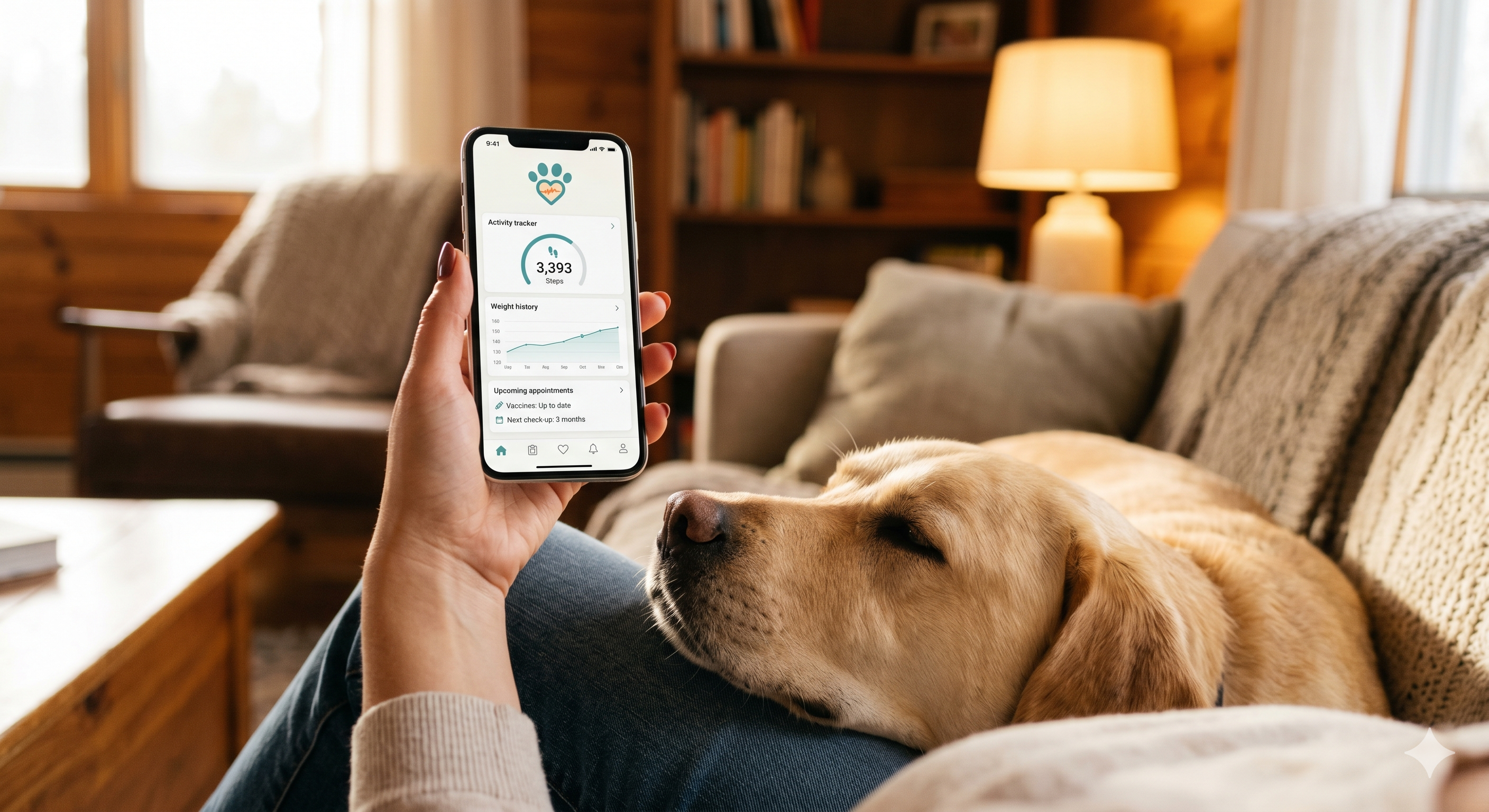
Pett organizes all of your pet's health records in one place on your phone. You can log vet visits, medications, vaccinations, conditions, allergies, and weight history for any animal, then access those records from your phone at any vet visit. If you have multiple pets, each one has their own profile with separate records.
For people who share pet care, Pett lets you invite family members or caretakers to a pet's profile. Everyone sees the same records, so there's no version control problem when your partner takes the dog to the vet while you're at work.
What records to prioritize for an emergency
Emergency vets work faster when they have accurate information from the start. The records that matter most in an emergency are current medications (name, dose, frequency), known allergies, chronic conditions, and the name and contact of your regular vet. Having these accessible on your phone means you can provide them immediately rather than trying to remember under stress.
Weight history also matters more than most people realize. Emergency medication dosing is often weight-based, and an accurate recent weight is more useful than an estimate. Logging weight at home between vet visits adds data points that improve dosing accuracy.
Keep all your pet's records in Pett
Vet visits, medications, vaccinations, allergies, and weight history. Organized, searchable, and always on your phone. Free on iOS and Android.