New Puppy Checklist: What to Do in the First 8 Weeks
The first two months with a new puppy involve more vet visits than most people expect. Puppies need a series of vaccines spaced several weeks apart, deworming treatments, a heartworm prevention start date, and typically a spay or neuter conversation at some point in the first year. Getting organised from day one means fewer things fall through the cracks as the chaos of puppyhood sets in.
This checklist covers the medical side of the first eight weeks. Socialization, training, and sleep deprivation management are separate topics entirely.
Before or within the first few days
Schedule the first vet visit
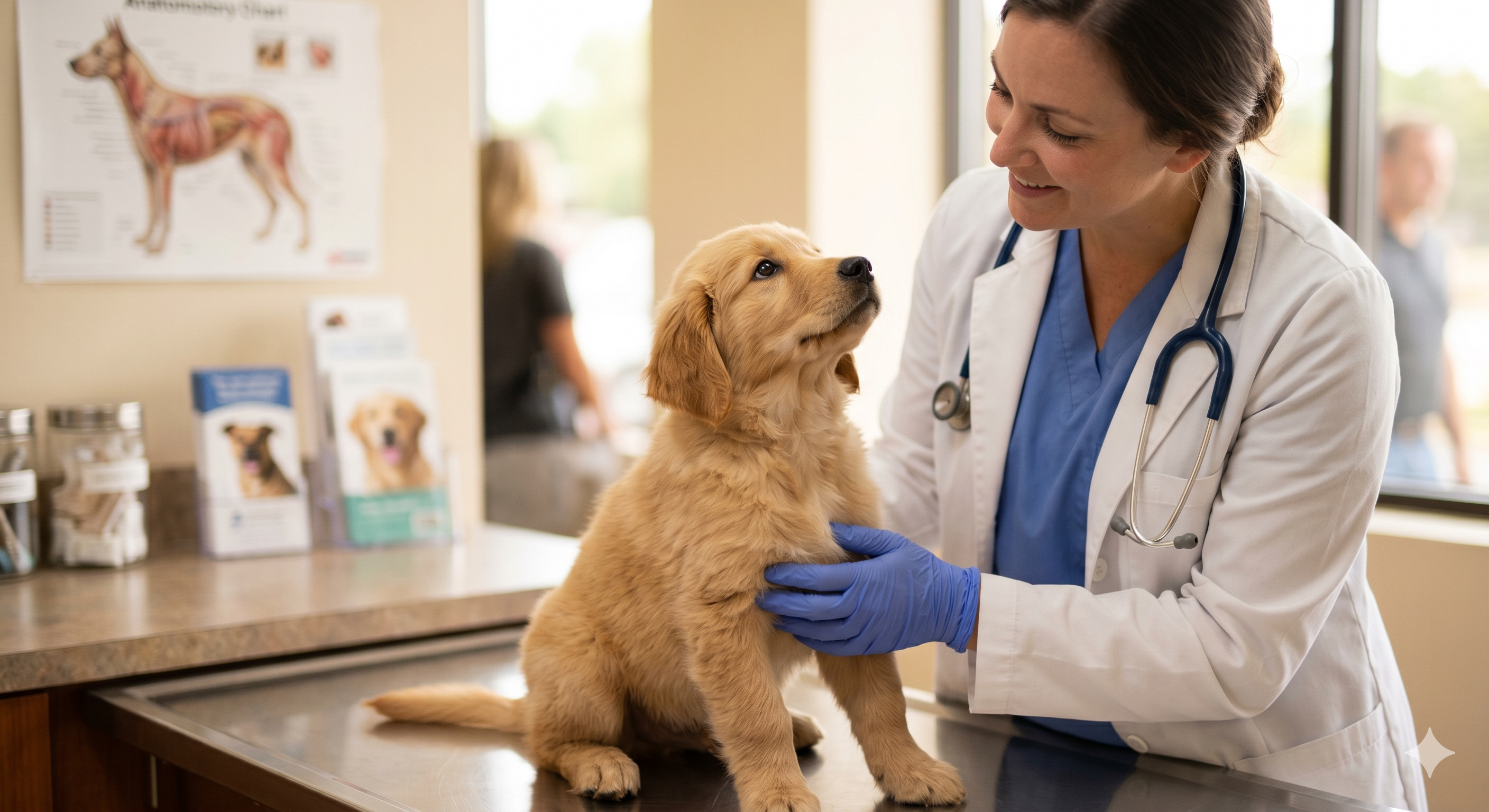
Most breeders and shelters recommend a vet visit within 48 to 72 hours of bringing a puppy home, regardless of whether the puppy has already had a vet check. Your vet will assess the puppy's overall health, check for parasites, start or review the vaccination schedule, and give you a chance to ask questions. Bring any records provided by the breeder or shelter.
Gather existing records
Breeders typically provide a record of any vaccines already given, deworming treatments, and the puppy's date of birth. Shelters provide whatever is on file, which can vary considerably. Some puppies arrive with a full first round of vaccines; others have nothing. What you receive at that handoff is the baseline your vet will build from.
If records are incomplete or missing: Don't assume. Tell your vet what you do and don't know. They may restart the vaccine series from scratch rather than risk gaps, which is safer than assuming a dose was given.
First vet visit (typically 6–8 weeks)
| What happens | Why it matters |
|---|---|
| Full physical exam | Checks for heart murmurs, hernias, eye/ear issues, and signs of illness |
| DA2PP vaccine (first dose) | Covers Distemper, Adenovirus, Parvovirus, Parainfluenza |
| Fecal test | Most puppies have intestinal parasites; identifying the type determines treatment |
| Deworming | Often given regardless of fecal results given how common roundworms and hookworms are in puppies |
| Heartworm prevention discussion | Most products can be started at 8 weeks; your vet will recommend a specific one |
| Flea prevention discussion | Age and weight thresholds vary by product; your vet will advise |
Second visit (10–12 weeks)
The second round of vaccines builds on the first. By this point the puppy's maternal antibody levels are declining, making the vaccines more effective than they would have been at an earlier age.
- DA2PP (second dose)
- Bordetella (kennel cough), if the puppy will be around other dogs
- Leptospirosis (first dose), depending on risk and local prevalence
- Fecal recheck if parasites were found at the first visit
Third visit (14–16 weeks)
This is typically the last visit in the puppy vaccine series, and the one where Rabies is given for the first time. Rabies vaccination is required by law in most jurisdictions; you will receive a certificate that you should keep with your records.
- DA2PP (third dose)
- Rabies (first dose)
- Lyme vaccine (if recommended based on your area)
- Any remaining non-core vaccines
- Discussion of spay or neuter timing
12 to 16 months
Roughly one year after completing the puppy series, your dog will need booster doses of DA2PP and Rabies, along with any annual non-core vaccines. This is also when most vets schedule the first heartworm test if the dog has been on prevention since puppyhood.
What to record and keep
The records from the puppy period are among the most important your dog will ever have. They establish the vaccine baseline, document deworming treatments, and contain the weight history from a period of rapid growth. Vets use this history when making decisions about medications (many are dosed by weight), and it becomes relevant context if your dog develops any health issues later in life.
For each vet visit in the puppy period, keep a record of:
- Date and clinic name
- Puppy's weight at that visit
- Vaccines given and lot numbers
- Deworming products used
- Fecal test results
- Any abnormalities noted and what follow-up was recommended
- Start date and product name for heartworm and flea prevention
Puppy checklist summary
- Vet visit within 72 hours of bringing puppy home
- Existing records gathered and given to vet
- DA2PP series completed (6–8 weeks, 10–12 weeks, 14–16 weeks)
- Rabies vaccine given at 14–16 weeks
- Non-core vaccines discussed and scheduled as appropriate
- Fecal test and deworming completed
- Heartworm prevention started
- Flea and tick prevention started
- Spay/neuter timing discussed with vet
- All records saved with dates, products, and next due dates
- 12–16 month booster appointment scheduled or noted
Track your puppy's health from day one
Log every vaccine, vet visit, and medication in Pett. Get reminders for the next dose or booster. Free to download.